Etna Rosso vs Etna Bianco
How Etna Rosso and Etna Bianco actually differ — grape, colour, acidity, food pairing and where to taste each — and which one to prioritise first.
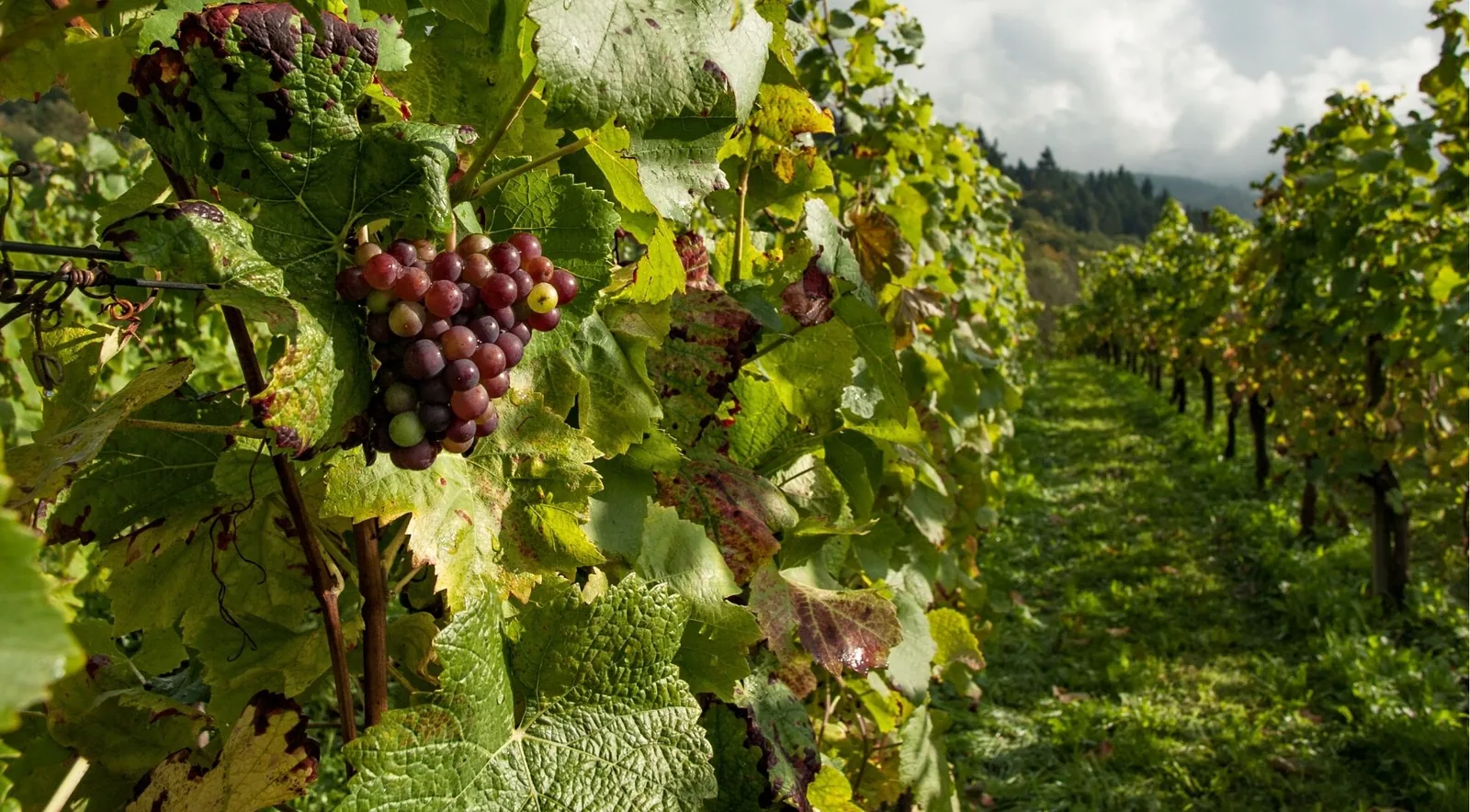
Visit an Etna winery and the first real decision arrives before you have tasted anything: Etna Rosso or Etna Bianco? It is not as obvious a choice as it sounds. Etna Rosso, built mainly on Nerello Mascalese, is the style with the international reputation — red fruit, herbs, acidity and fine tannin behind a colour paler than most visitors expect. Etna Bianco, built primarily on Carricante, can be just as distinctive: citrus, saline character, mineral freshness and real ageing potential. For many visitors, the biggest surprise of an Etna trip is realising the volcano is not just a red-wine region.
Check Availability
Etna Rosso vs Etna Bianco at a glance
| Feature | Etna Rosso | Etna Bianco |
|---|---|---|
| Main grape | Nerello Mascalese | Carricante |
| Colour | Pale to medium ruby | Pale straw to golden |
| Body | Usually medium | Light to medium |
| Acidity | High | High |
| Tannin | Medium to high | None |
| Typical flavours | Cherry, strawberry, herbs, spice | Lemon, apple, herbs, saline notes |
| Best-known area | North Etna | East Etna, especially Milo |
| Best with | Meat, mushrooms, aubergine, aged cheese | Seafood, shellfish, fish, fresh cheese |
| Ageing potential | Good to excellent | Good to excellent |
| Best for Pinot Noir/Nebbiolo drinkers | Yes | No |
| Best for Chablis/Riesling drinkers | No | Yes |
What is Etna Rosso?
Etna Rosso is the main red-wine category of the Etna DOC, built predominantly on Nerello Mascalese with Nerello Cappuccio permitted in the blend. The result usually combines a relatively pale colour with fresh red fruit, high acidity, fine tannin and a savoury character — typical flavours run to red cherry, wild strawberry, raspberry, dried flowers, herbs, black tea, spice and earthy notes. It tends to feel more elegant than powerful, which is exactly what makes it so different from the heavier reds most visitors associate with Sicily.
What is Etna Bianco?
Etna Bianco is the white-wine category of the Etna DOC, and must contain at least 60% Carricante. Carricante gives the wine high acidity, citrus character, freshness, saline notes and mineral structure — lemon, green apple, white flowers, herbs, citrus peel, almond and stony or saline impressions are all typical. It can be simple and crisp, or, in the better examples, surprisingly serious and age-worthy.
Which is more famous, and which is more typical of the mountain?
Etna Rosso is generally the better-known style internationally — Nerello Mascalese has drawn attention from sommeliers, collectors and fine-wine drinkers for its elegance, terroir expression and ageing potential. But Etna Bianco has become increasingly important, and many serious producers now treat Carricante as one of the region’s most valuable grapes; for wine enthusiasts, the whites are no longer a secondary thought.
Neither is more “typical” of Etna than the other — that is the important point. Taste only the red and you understand only one side of the volcano: North Etna, red-wine contrade, tannin and fruit. Taste only the white and you get East Etna, Milo, acidity and salinity, but miss the other half. The strongest tasting experience on Etna includes both.
How the two grapes compare
The key red grape, Nerello Mascalese, is known for pale colour, high acidity, tannin, red fruit and floral notes, and is often compared with Pinot Noir and Nebbiolo — useful because all three combine light colour with real structure. The key white grape, Carricante, is known for high acidity, citrus, salinity, mineral style and ageing ability, and is sometimes compared loosely with Chablis, Riesling and other high-acid mineral whites, though it has its own identity distinct from all of them.
Visually, Etna Rosso is often surprisingly light — in body, it usually runs medium while Etna Bianco runs light to medium, but neither is simple: both can carry serious structure. Both styles are also known for high acidity, one of Etna’s defining features, preserved by high-altitude vineyards and cooler nights; Etna Rosso feels lively rather than heavy as a result, and Etna Bianco feels crisp rather than soft. Tannin is where they genuinely diverge — Nerello Mascalese can be surprisingly tannic, while Etna Bianco has none in the sense associated with red wine, so if tannic reds put you off, Etna Bianco may be the easier style to enjoy.
Both are often described as mineral. Etna Bianco leans toward salinity, stony character and citrus-mineral freshness; Etna Rosso can show smoky, earthy, stony or savoury notes of its own. Treat “mineral” as useful tasting language rather than literal rock flavour in the glass.
Flavour and ageing
Young Etna Rosso commonly shows cherry, strawberry, raspberry, herbs, dried flowers, tea, spice and earth, and premium examples can develop tobacco, leather, forest floor and dried fruit with age. Young Etna Bianco commonly shows lemon, lime, green apple, white flowers, herbs, almond, saline notes and citrus peel, with older examples turning toward wax, honey, nuts and preserved citrus. Both can age very well in serious bottlings, which is one reason a good Etna tasting often includes an older vintage of each.
Which suits your palate?
If you already know your preferences, the choice is straightforward. Choose Etna Rosso if you like Pinot Noir, Nebbiolo, Sangiovese or lighter reds with real structure — the similarities to Pinot Noir are pale colour, red fruit, perfume and elegance (expect more tannin, though), and to Nebbiolo, pale colour, acidity, tannin and ageing potential. Choose Etna Bianco if you like Chablis, Riesling, Sauvignon Blanc or mineral whites generally — the Chablis appeal is freshness, citrus, minerality and restrained fruit, and the Riesling appeal is high acidity, ageing potential and a strong sense of place, even though the flavour profile differs.
By season, Etna Bianco is usually easier in hot weather — chilled, with seafood, at an outdoor lunch — while Etna Rosso, served slightly cool, often suits winter and richer food better. Neither rule is strict: mature Etna Bianco can be excellent in colder months too.
Food pairing
Both styles are genuinely food-friendly. Etna Rosso pairs well with lamb, pork, mushrooms, aubergine, ragù, tomato-based pasta and aged cheese; on a Sicilian table, look for pasta alla Norma, caponata, grilled sausage or mushroom dishes. Etna Bianco pairs well with seafood, shellfish, grilled fish, swordfish, fresh cheese and vegetable dishes; on a Sicilian table, that means swordfish, sardines, shellfish, seafood pasta or ricotta. As a simple rule, choose Etna Bianco for a seafood-heavy meal and Etna Rosso for a meat-heavy one — and if you are doing a winery lunch, ask for both across different courses.
Where to taste each
For serious red-wine tasting, focus on North Etna — Castiglione di Sicilia, Passopisciaro, Randazzo, Linguaglossa and Solicchiata are where most of the famous Nerello Mascalese vineyards and contrade sit. For serious white-wine tasting, focus on East Etna — Milo, Santa Venerina and Zafferana Etnea, with Milo particularly important because of Etna Bianco Superiore, which requires at least 80% Carricante from the designated Milo production area, making it one of the most geographically focused white-wine categories on the mountain.
Etna Rosso does not have an equivalent single sub-zone; instead it expresses place through contrade, named vineyard districts such as Calderara Sottana, Feudo di Mezzo, Guardiola, Santo Spirito, Rampante and Sciaranuova. Contrada wine and Etna Bianco Superiore are different concepts — one is a geographic labelling tradition mostly associated with red wine, the other a regulated category tied specifically to Milo — but both point at the same underlying fact: geography matters enormously on Etna. See the full Etna wine region guide for how the slopes differ, and the Etna DOC guide for the grape rules behind both categories.
To taste both styles side by side without driving between two sides of the volcano, the urban winery tasting in Catania pours a Vigna Grande red alongside a sparkling, a white and a rosato at one sitting — an efficient way to compare Rosso and Bianco in a single flight.
What should you taste at a winery, and is one more expensive?
A balanced tasting covers the full range: an Etna Bianco, an Etna Bianco Superiore or premium Carricante, an Etna Rosato, a standard Etna Rosso and a contrada Etna Rosso. For a first visit, one white, one rosé, one red and one premium red or white is enough to understand the basics; for a deeper tasting, look for two Carricante wines, two Nerello Mascalese wines, a contrada comparison and an older vintage.
There is no fixed answer on price — entry-level versions of both can be reasonably priced, and premium prices for either rise with single-vineyard origin, contrada, old vines, low production, prestige producer and ageing. Etna Rosso may edge ahead at the very top end thanks to strong collector demand, but serious Carricante, particularly from Milo, can be just as expensive.
Buying a bottle, or deciding on the day
Buy Etna Rosso if you want a gift, you already like red wine, you plan to cellar it, or you prefer terroir-driven reds. Buy Etna Bianco if you like mineral whites, you eat seafood often, you want something a little more unusual to bring home, or you want a white built to age.
Both grapes are unique in their own way: Nerello Mascalese for combining light colour with real structure, Carricante for combining acidity, salinity and ageing potential in a warm climate. Trying both is the clearest way to understand what makes Mount Etna distinctive as a wine region.
Frequently asked questions about Etna Rosso and Etna Bianco
Is Etna Rosso red wine?
Yes. It is the main red-wine category of the Etna DOC, based primarily on Nerello Mascalese.
Is Etna Bianco white wine?
Yes. It is based primarily on Carricante, with at least 60% required in the blend.
Which is more famous?
Etna Rosso is currently more famous internationally, but Etna Bianco is increasingly recognised as one of Sicily’s most serious white wines.
Which is lighter?
Etna Bianco is lighter in body, though Etna Rosso is often surprisingly pale in colour.
Which has more acidity?
Both are naturally high in acidity — one of the defining features of Etna wine generally.
Which is better with seafood?
Etna Bianco, thanks to its acidity and saline character.
Which is better with meat?
Etna Rosso, thanks to its tannin and structure.
Which ages better?
Both can age very well in premium examples, though the character each develops with age is different.
Where should I taste Etna Rosso?
North Etna, especially around Linguaglossa, Castiglione di Sicilia and Passopisciaro.
Where should I taste Etna Bianco?
East Etna, especially Milo.
Final verdict
The real answer to Etna Rosso vs Etna Bianco is: do not choose only one if you are visiting Mount Etna. Etna Rosso shows the elegant, structured side of Nerello Mascalese; Etna Bianco shows the fresh, saline side of Carricante. If you already prefer red wine, start with Etna Rosso; if you prefer white, start with Etna Bianco. But for the best introduction to the region as a whole, taste one standard Etna Bianco, one premium Carricante, one standard Etna Rosso and one contrada red in the same sitting — that comparison will teach you more about Mount Etna than any single style tasted on its own.
Related guides
Taste Etna Where It Grows
Cellar visits, Etna DOC tastings and vineyard lunches on the slopes of an active volcano — leaving Taormina and Catania most mornings. Free cancellation on every tour compared here.
Check Availability & Book