Mount Etna Wine Tasting: What to Expect
What actually happens at an Etna wine tasting, what it costs, which wines you will be poured, how long it takes, and which of the six formats fits your day.
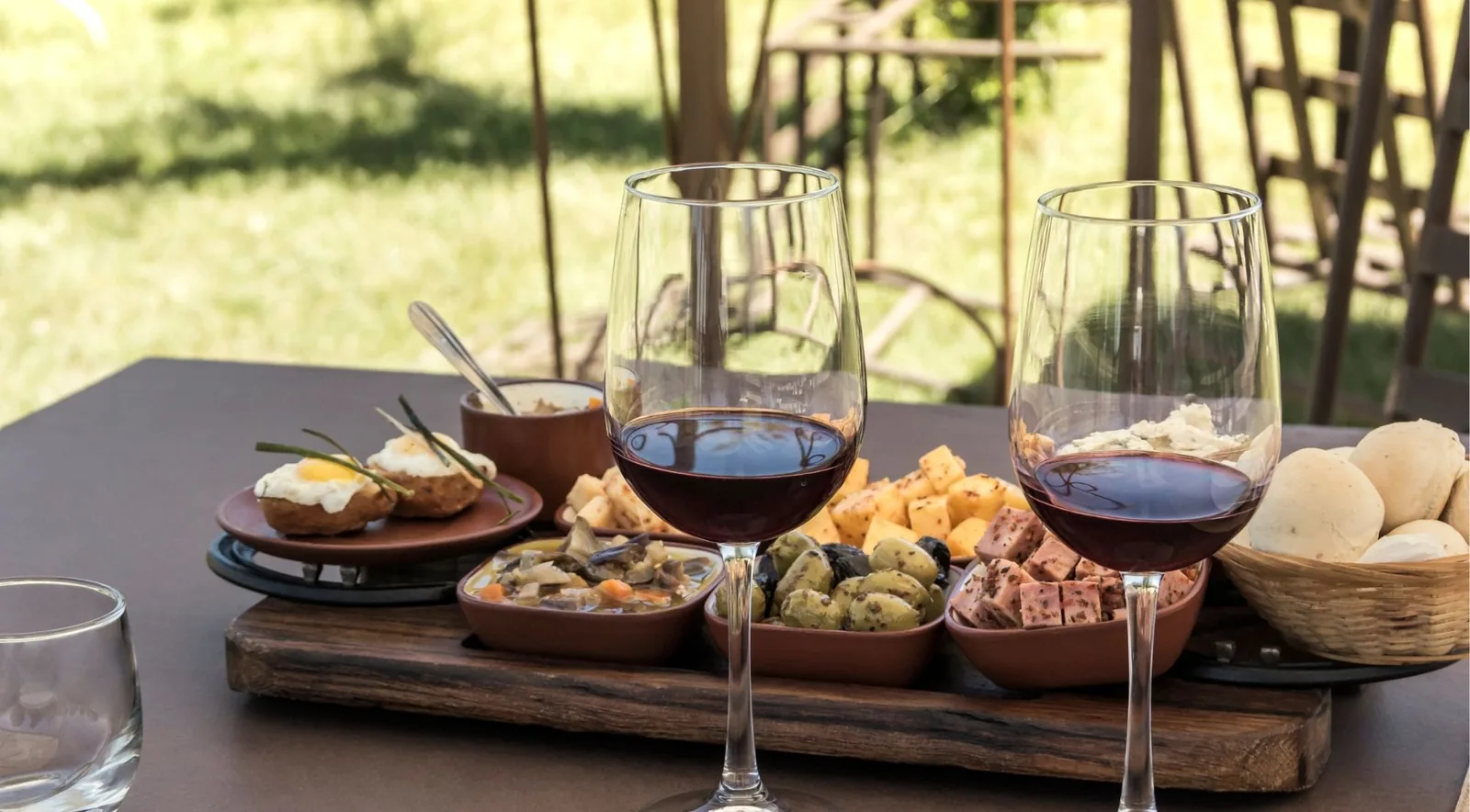
Wine tasting on Mount Etna works differently from a conventional wine region. The vineyards climb the side of an active volcano, the vines sit in dark volcanic soil, and most estates are split into small contrade — historic vineyard districts whose altitude, exposure and underlying lava flow visibly change the wine.
For a visitor, “an Etna wine tasting” covers everything from a 90-minute cellar visit with four glasses to a full day that bundles vineyards, Sicilian food, volcano scenery and transport from Catania or Taormina.
This guide sets out what happens at an Etna wine tasting, what it costs, which wines you are likely to be poured, and which format fits the day you actually want.
Quick answer: booked directly with an estate, a basic Mount Etna tasting commonly starts around €25–€40 per person, and tastings with substantial food run about €40–€70+. Booked through this site — where the price includes the reservation, and often the transport — cellar visits start at $47 and transfer-inclusive half-days at $67. Premium, private and full-day formats cost considerably more. Prices move with season and inclusions, so check the exact experience before you pay.
Check Availability
Is Mount Etna good for wine tasting?
Yes. Etna is one of Sicily’s most distinctive wine regions — see our Etna wine region guide for how the slopes actually differ — and worth a day even if wine is not the reason you came to Sicily.
The volcano produces an unusual combination of:
- high-altitude vineyards
- mineral-rich volcanic soils
- strong day-to-night temperature swings
- old vines
- steep terraces
- numerous microclimates on different sides of the mountain
The main local grapes are Nerello Mascalese, behind most of Etna’s reds, and Carricante, the key grape in the whites. Both are covered in detail in the Etna DOC guide.
Rather than the big, heavy Sicilian reds most people expect, visitors are usually surprised by how fresh and elegant Etna wines are.
And if you want to understand the region properly, tasting the wines where the grapes grow adds far more than ordering an Etna Rosso in a Catania restaurant.
What happens at a Mount Etna wine tasting?
The format varies, but almost every winery visit follows the same shape.
1. Arrival at the estate
You arrive at a pre-booked time.
Some wineries are straightforward to reach by car; others are tucked into the rural slopes around towns such as:
- Linguaglossa
- Randazzo
- Castiglione di Sicilia
- Milo
- Santa Venerina
- Trecastagni
Do not assume you can turn up. Most Etna wineries require an advance reservation for tastings, and several ask you to name a preferred start time so they can confirm it back.
2. Vineyard or cellar visit
Depending on the experience, somebody from the estate will walk you through:
- the vineyards
- the production areas
- barrel rooms
- historic palmenti
- terraces and lava-stone walls
- the story of the estate and its contrade
Short tastings concentrate on the wine and give the cellar a brief introduction. Longer ones spend real time on volcanic soils, vineyard altitude, and how different parts of the mountain produce different styles.
3. Guided wine tasting
A standard tasting covers around 3–5 wines. A typical progression:
- sparkling wine or rosé
- Etna Bianco
- another white, or a single-vineyard wine
- Etna Rosso
- a more structured or contrada-specific red
Premium tastings add older vintages, single-contrada wines or limited-production bottles.
4. Food pairing
Most Etna tastings include at least a snack. More substantial ones add:
- local cheeses
- cured meats
- olives
- bread
- olive oil
- vegetables
- preserves
- traditional Sicilian dishes
- dessert
Read the wording carefully. A “tasting with local products” is not necessarily lunch, while a “wine lunch” or “food and wine experience” means considerably more food. The difference between the $47 tasting at Gambino and the $68 one at the same estate is exactly this: the first gives you a hard-boiled egg, the estate’s olive oil, preserves in oil and Sicilian cheeses; the second adds cold cuts, a seasonal soup, grilled sausage with baked potatoes and spinach, and a ricotta cannolo. One is a tasting. The other is lunch.
Mount Etna wine tasting prices
There is no standard price, because the experiences are not standard.
The useful way to think about cost is by category.
| Experience | Typical price range | Typical duration |
|---|---|---|
| Basic winery tasting | €25–€40 pp | 45–75 min |
| Wine + local food pairing | €35–€70 pp | 1–2 hrs |
| Contrada / premium tasting | €50–€100+ pp | 1.5–2 hrs |
| Luxury / winemaker-led tasting | €100–€150+ pp | 1.5–2+ hrs |
| Winery lunch + tasting | €50–€100+ pp | 1.5–3 hrs |
| Guided wine tour with transport | €90–€160+ pp | 5–8 hrs |
| Private wine tour | Often €150+ pp, or priced per group | Half/full day |
These are planning ranges, not tariffs.
They are also cellar-door figures, quoted in euros as the estates themselves quote them. The listings compared on this site are priced in US dollars and include the reservation — and for the tour formats, the transport — so they sit at or a little above the top of each band: $47 and $68 for the two cellar visits, $67 for a half-day with transfers, $162 for a two-winery day, $200 for the food-led day. The full spread is broken down in the Etna wine tour price guide.
A real winery pricing example
At the time of writing, Tornatore runs several clearly differentiated tasting levels:
- a classic tasting with four wines
- a tasting with local cured meats and cheeses
- a more focused contrada-wine tasting
- a premium VIP tasting
That is a good illustration of why two Etna tastings can be priced very differently at the same estate: the gap is rarely just the number of glasses. It is which wines are poured, how much food comes with them, how long it runs, and how much of a guide’s attention you get.
For a specific bookable option, Tornatore’s cellar visit with four wines and a tasting board is listed on GetYourGuide as a new activity (checked 15 September 2026). This is a standard tasting; it does not promise the estate’s contrada or VIP selection.
Which Etna wines will you taste?
Etna Rosso
For most visitors this is the wine they associate with the mountain.
Etna Rosso is based mainly on Nerello Mascalese, often with some Nerello Cappuccio.
Expect styles that show:
- red cherry
- wild strawberry
- dried herbs
- spice
- smoke
- earthy or mineral notes
- lively acidity
- noticeable but usually refined tannins
People reach for Pinot Noir or Nebbiolo as comparisons, because of the lighter colour, the perfume and the structure. Etna wines have their own character, but the comparison tells you what to brace for: this is not a heavy wine.
Etna Bianco
Etna Bianco is the best reason not to treat a tasting here as a red-wine exercise.
The key grape is Carricante. Typical characteristics include:
- citrus
- green apple
- white flowers
- herbs
- saline notes
- strong freshness
- mineral character
If your tasting pours both Etna Rosso and Etna Bianco, try both even if you normally prefer one colour. For a lot of people the whites are the surprise of the day.
Etna Rosato
Rosé is made here too, often from Nerello Mascalese, and it makes a genuinely useful bridge between the whites and the reds during a tasting.
Depending on the producer, expect a dry style with fresh red fruit and good acidity rather than anything sweet.
Contrada wines
If wine is the point of the trip, look for a tasting that includes contrada wines.
A contrada is a historic vineyard district on Etna. Individual contrade differ in:
- elevation
- exposure
- the age and composition of the lava soils
- rainfall
- temperature
- vine age
Comparing wines from different contrade is the fastest way to understand why Etna has the reputation it does among serious drinkers.
A standard tasting is perfectly adequate for a casual visitor. For an enthusiast, paying more for a contrada-focused flight is usually worth it. Worth knowing before you plan around it: no GetYourGuide listing on this site is a pure contrada flight — for that you book directly with an estate such as Cottanera, Tornatore or Pietradolce. See the winery guide for which estates run them.
Best types of Mount Etna wine tasting
There is no single best experience. The right one depends on what role wine plays in your day.
Best for first-time visitors: winery tour + 4 wines
Choose this if you want:
- a proper introduction to Etna wine
- a cellar visit
- enough wine to compare styles
- a manageable 60–90 minute experience
This is usually the best-value format, and it works well when you are seeing another part of Etna the same day.
Our pick: the Etna Nord tasting at Linguaglossa — $47, 90 minutes, 4.85★ from 55 reviews. A sommelier-led tour of a 25-hectare estate at 900 metres, a cellar eleven metres underground, a welcome glass of white, then four current vintages with food. You drive yourself. Our breakdown →
Best for food lovers: wine tasting with lunch
A wine-and-food experience earns its upgrade whenever lunch would otherwise be a separate stop.
Look for listings that state clearly:
- how many wines are included
- whether the food is a snack, a platter or a full meal
- whether water is included
- whether dietary requirements can be handled
An Etna winery lunch is one of the best ways to slow a volcano day down.
Our picks: the premium tasting at Gambino — $68, two hours, 4.77★ from 135 reviews, five glasses and a hot course — if you have a car; or the Taormina food and wine tour — $200, six hours, 4.84★ from 438 reviews, two family-run properties, five glasses, a guided cellar visit and a full organic lunch above the vines, finishing with homemade limoncello. More of these on the food and wine page.
Best for wine enthusiasts: contrada or premium tasting
Choose a premium tasting if you care about the wine rather than about having a pleasant afternoon in a vineyard.
The upgrades actually worth paying for are:
- single-vineyard wines
- contrada comparisons
- older vintages
- estate reserve wines
- direct access to a winemaker or a genuinely knowledgeable host
A premium tasting makes much less sense if what you want is views, photographs and a relaxed lunch.
Our pick: the private three-winery day — from $314 per person, 6.5–7 hours, 4.91★ from 105 reviews. Three family estates, ten wines, a sommelier at each, food at every stop, and vineyard walks rather than cellar-door pours. It is priced per person, so it costs more per head than the shared food tour, for twice the wine and a car to yourselves. Our breakdown →
Best for easy logistics: wine tour with transport
If nobody in the group wants to drive, a guided tour from Catania or Taormina is usually the simplest answer.
These tours can include:
- hotel or meeting-point pick-up
- transport to Etna
- the winery visit
- the tasting
- food
- volcano sightseeing
- the return transfer
The advantage is not the price. It is logistics — no designated driver, no rural navigation, no coordinating several winery appointments against each other.
Our picks: the Taormina half-day — $67, five hours, 4.70★ from 646 reviews, which is the most-reviewed Etna wine tour on the market; or, from the other side of the mountain, the 1790 urban winery in Catania — $70, 4.92★ from 87 reviews, a walled estate and working vineyard inside the city, with four Etna wines across a full Sicilian lunch and no drive at all. Compare the rest on the Catania page and the Taormina page, or read the Catania wine tour guide for pickup zones and drive times.
Wine tasting only vs Mount Etna + wine tour
This is the most consequential decision on the page.
Choose wine tasting only if:
- wine is your main interest
- you have already been up Mount Etna
- you are self-driving
- you want a relaxed day
- you want to visit more than one winery
- hiking and crater sightseeing do not appeal
A wine-only day buys you time in the vineyards and stops you cramming an itinerary.
Choose an Etna + wine combination if:
- this is your first visit to Mount Etna
- you have limited time in Sicily
- you want volcano scenery and wine
- you prefer organised transport
- you only want to visit one winery
For a lot of first-time visitors the combination is the better use of a day. The Catania day with Etna, wine and the Alcantara is the benchmark — $106, eight hours, 4.84★ from 548 reviews, with a naturalist guide rather than a coach host, a crater walk at around 2,000 metres, a lava cave with helmet and lamp, a sit-down winery lunch, and the basalt gorge of the Alcantara; boots, jacket, entrance fees and insurance are included. The Taormina equivalent is $151 for 8.5 hours in a small group, 4.83★ from 519 reviews.
Be clear with yourself about what you are buying, though. On a combination day the tasting is one course of a lunch, poured by whoever is serving — it is a volcano day with wine in it, not a wine day. If both matter, read which format suits you before you book, or the full breakdown of whether the volcano + winery combo is worth it for how much of Etna you actually see on one of these days.
How many wineries should you visit in one day?
For most people: two wineries is ideal.
Three can work if:
- the wineries are close together
- the tastings are short
- somebody is driving and limiting their alcohol
- you start early
- your appointments are confirmed
Trying to fit in four or five turns a relaxed wine day into a schedule.
Remember that Etna is not a compact pedestrian wine region. Driving between estates takes real time, and the roads wind around the mountain rather than across it.
If you want two without organising them yourself, the small-group two-winery day from Taormina is the format — $162, 8.5 hours in a nine-seater, 4.83★ from 107 reviews, an aperitivo of local products at the first estate and three DOP Etna wines over a full lunch at the second, with a stop in Castiglione di Sicilia. It excludes under-18s. Our breakdown →
Can you visit Etna wineries without a tour?
Yes.
A self-drive winery day can be excellent, and it gives you much more control over:
- which estates you visit
- how long you stay
- where you eat
- which side of Etna you explore
There are two catches.
Reservations
Many estates work by appointment. “Winery open” does not mean a tasting is available whenever you arrive. Book in advance.
Driving after wine tasting
Somebody in your group has to stay legally and safely able to drive.
If everybody wants to drink, use:
- a guided wine tour
- a private driver
- a taxi transfer arranged in advance
Public transport is not a practical way to hop between rural Etna wineries.
The cellar-door tastings above are built for exactly this — you book the slot through this site and drive yourself, which is why they are the cheapest way to taste on the mountain. For a full DIY itinerary, see Visiting Mount Etna wineries without a tour.
Which side of Mount Etna is best for wine?
There are excellent vineyards on several sides of Etna, but the days differ.
North Etna
The northern slopes around Randazzo, Castiglione di Sicilia and Linguaglossa hold many of the region’s best-known vineyards, and the area is particularly associated with Nerello Mascalese and serious reds.
It is the strong choice if you are staying in:
- Taormina
- Giardini Naxos
- Castelmola
- northeast Sicily
Almost everything bookable on this site happens here. Full detail on the Etna Nord page.
East Etna
The eastern side around Milo, Santa Venerina and the slopes above the Ionian coast is the one for white wine. Milo is closely associated with high-quality Carricante and Etna Bianco Superiore.
It also makes sense when you are travelling from:
- Catania
- Acireale
- Giarre
- the eastern coast
Be aware that this slope has far fewer estates set up to receive visitors, and almost none selling through booking platforms — plan the east around direct reservations.
If wine is the priority, choosing the right side of Etna saves a lot of unnecessary driving. The south-slope page covers the third option, above Catania.
Best time of year for Mount Etna wine tasting
Etna wineries run through most of the year, but the seasons feel different. Our season guide goes into this properly.
Spring
Spring is excellent for:
- greener landscapes
- mild temperatures
- fewer summer crowds
- combining wine with sightseeing
April, May and early June are particularly pleasant.
Summer
Summer brings:
- long daylight hours
- dry weather
- busy tourism
- hotter conditions at lower elevations
The vineyards can still feel more comfortable than Sicily’s coastal cities, purely because of the altitude. Book popular tastings in advance if your dates are fixed.
Harvest season
Late summer into autumn is the most interesting window, because the wineries are actively working with newly picked grapes.
Exact timing shifts with:
- grape variety
- vineyard altitude
- exposure
- weather
Etna’s high-altitude vineyards are harvested later than most people expect. A visit during harvest is fascinating — and the estates are also extremely busy.
Winter
Winter is quieter and can be atmospheric, especially with snow higher up.
The trade-offs are:
- shorter daylight
- colder weather
- occasional reduced visitor schedules
- greater weather variability
If the trip is about the wine rather than the vineyard scenery, winter still works.
How long does an Etna wine tasting take?
Allow roughly:
- 45–75 minutes for a basic tasting
- 1.5 hours for a tasting with a cellar tour and food
- 2–3 hours for lunch experiences
- 5–8 hours for organised half- or full-day wine tours
Do not schedule appointments tightly. A tasting advertised as 60 minutes easily runs longer once you add:
- parking
- check-in
- shopping
- photographs
- conversation
- walking the estate
Should you book Etna wine tasting in advance?
Usually, yes.
Advance booking matters most:
- from May to October
- at weekends
- during harvest
- for lunch experiences
- for private tastings
- at small boutique wineries
- if you need an English-speaking host
For a basic weekday tasting outside peak season, last-minute availability may exist, but relying on it is an unnecessary risk if there is a particular winery you want. Everything compared on this site confirms instantly and can be cancelled free up to 24 hours before it starts, which takes most of the risk out of booking early.
What to wear to an Etna winery
You do not need to dress formally. Comfortable smart-casual clothing and practical shoes.
Remember that a vineyard visit can involve:
- gravel
- uneven ground
- slopes
- dust
- grass
- cellar temperatures well below the outside air
Even in summer, a light layer is useful. And if the day also includes a crater walk, dress for the volcano rather than the tasting room — the tours that go up the mountain generally supply boots and a jacket if you ask at booking.
Can children come to Etna wineries?
Some wineries welcome families, but policies vary — and a few of the tours compared here exclude under-18s outright, so check before you book for a group.
Children obviously cannot take part in the alcoholic tasting, but an estate may let them join:
- vineyard walks
- cellar visits
- meals
- picnics
If you are travelling with children, check:
- minimum age rules
- whether a reduced visitor fee applies
- whether food or soft drinks are available
- whether the experience involves long seated explanations
A relaxed winery lunch is usually easier for a family than a technical two-hour premium tasting.
Is an Etna wine tasting worth it?
For most visitors with any interest in Sicilian food and wine, yes.
It is worthwhile specifically because the landscape and the geology explain the wines. You are not tasting bottles in a generic room. You can see:
- black lava soil
- terraced vineyards
- old vines
- steep elevation changes
- the volcano standing above the vines
That connection is what makes an Etna tasting stick in the memory in a way an isolated flight in town does not. Whether it is worth a day of your holiday is its own question.
The experience is better still when the format matches your actual interest:
Choose a basic tasting if: you are curious about Etna wine but it is one part of a bigger day.
Choose food + wine if: you want a relaxed Sicilian experience rather than a technical tasting.
Choose a contrada tasting if: you already enjoy wine and want to understand why Etna is taken seriously as a terroir-driven region.
Choose a guided wine tour if: convenience and not driving matter more than visiting specific estates independently.
How to choose the best Mount Etna wine tasting
Before booking, check these seven things:
- How many wines are included?
- Which wines are included?
- Is the food a snack, a pairing platter or a full meal?
- Does the experience include the vineyard, the cellar, or only the tasting room?
- How long does it last?
- Do you need your own transport?
- Is the tasting private, small-group or shared with a larger group?
Do not choose by the number of glasses. Four carefully selected Etna wines with a knowledgeable host beat eight anonymous pours every time.
Frequently asked questions about Mount Etna wine tasting
How much is wine tasting on Mount Etna?
Booked directly with an estate, a basic winery tasting commonly starts around €25–€40 per person, and tastings with food run €40–€70+; premium, private or winemaker-led tastings can pass €100 per person. Booked through this site, cellar visits start at $47 and half-days with transport at $67. Full tours that add transport and volcano sightseeing cost more.
Do you need to book Mount Etna wineries in advance?
It is strongly recommended. Most Etna wineries run tastings by appointment, and the popular experiences fill up through the main Sicily travel season.
What wine is Mount Etna famous for?
The two grapes worth knowing are Nerello Mascalese, behind Etna Rosso, and Carricante, the key grape in Etna’s distinctive whites.
How many wines do you taste at an Etna winery?
Most standard experiences pour around 3–5 wines. Premium tastings may include more, or concentrate on higher-level single-vineyard or contrada wines.
Can you do Mount Etna and a winery on the same day?
Yes, and it is one of the most popular ways to structure a day here. A morning volcano visit followed by lunch and a tasting works particularly well.
Is Etna wine tasting suitable for beginners?
Absolutely. You need no wine knowledge. A good winery will explain the grapes, the volcanic soils and the styles in plain language.
Is lunch normally included in a wine tasting?
Not automatically. Some tastings include only crackers or small snacks, others cheese and charcuterie, while dedicated food-and-wine experiences include a substantial lunch. Read the inclusions carefully.
Can I visit Etna wineries from Catania?
Yes. Catania is one of the most convenient bases, with both self-drive routes and organised tours with transport — plus a working urban winery inside the city itself, a walled 1790 estate with its own vineyard, four Etna wines and a full Sicilian lunch.
Can I visit Etna wineries from Taormina?
Yes. Taormina is particularly convenient for the estates on the northern and northeastern slopes, which are roughly an hour inland.
Final verdict
A Mount Etna wine tasting is one of the easiest ways into a side of the volcano most day-trippers never see.
If this is your first visit and you want an introduction, book a 60–90 minute winery tour with four wines. If food matters as much as wine, upgrade to a tasting with lunch or a substantial Sicilian pairing. And if you already know you enjoy wine, look past the cheapest option and pick something that compares contrade, vineyard sites or premium Etna DOC wines.
The decision that matters is not which tasting pours the most glasses. It is whether you want a quick introduction, a long food-and-wine afternoon, or a proper look at what makes these vineyards unusual.
Related guides
Taste Etna Where It Grows
Cellar visits, Etna DOC tastings and vineyard lunches on the slopes of an active volcano — leaving Taormina and Catania most mornings. Free cancellation on every tour compared here.
Check Availability & Book