Nerello Mascalese: Mount Etna's Signature Red Grape
What Nerello Mascalese tastes like, why it pours so pale, how it compares with Pinot Noir and Nebbiolo, where to taste it on Etna, and what to pair it with.
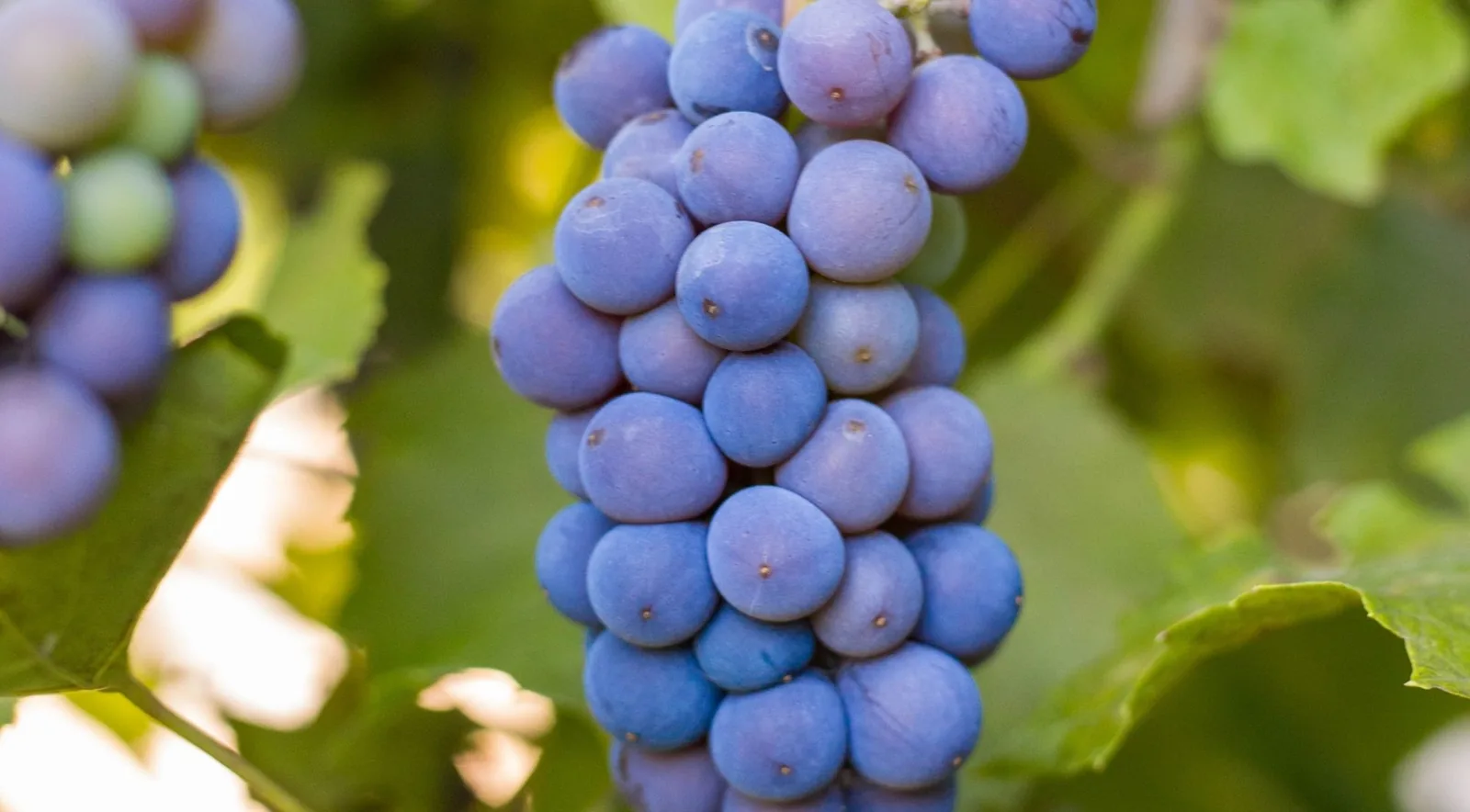
Nerello Mascalese is the red grape most closely associated with Mount Etna, and the grape most likely to surprise you at a tasting. Pour it and it looks pale, almost translucent at the rim — nothing like the dense, dark reds most visitors expect from Sicily. Taste it and the reason for the fuss becomes obvious: real acidity, fine tannin and a savoury, red-fruit character that has earned it comparisons to Pinot Noir and Nebbiolo. It is also the grape behind Etna Rosso DOC, and for many wine lovers it is the single reason Etna has become one of Sicily’s most exciting wine regions.
Check Availability
Nerello Mascalese at a glance
| Question | Quick answer |
|---|---|
| Wine colour | Pale to medium ruby |
| Main region | Mount Etna, Sicily |
| Main DOC association | Etna Rosso |
| Typical flavours | Red cherry, wild strawberry, herbs, flowers, spice |
| Acidity | High |
| Tannin | Medium to high |
| Body | Usually medium |
| Best-known comparisons | Pinot Noir, Nebbiolo |
| Ageing potential | Good to excellent in serious examples |
| Best food pairings | Mushrooms, aubergine, roast meats, aged cheese |
| Best Etna area for tasting | North Etna |
What is Nerello Mascalese?
Nerello Mascalese is a native Sicilian red grape, most strongly associated with the slopes of Mount Etna even though it is also grown elsewhere on the island. On the volcano it thrives in high-altitude vineyards, volcanic soils, cooler nights and long growing seasons, usually on terraced slopes that make it one of the more labour-intensive grapes in Italy to farm. It is the majority partner in Etna Rosso DOC, and it is the red you are most likely to be poured at any winery around the mountain.
What does it taste like, and why is it so pale?
Flavours vary by producer, vineyard and vintage, but common notes include red cherry, wild strawberry, raspberry, dried rose, violet, herbs, black tea, spice and a faintly smoky or stony impression. With bottle age it often turns more savoury — leather, dried flowers, tobacco, forest floor — and the wine tends to read as more elegant than heavy, which is exactly what surprises visitors expecting something rich and dark.
The pale colour is not a sign of thin wine. Nerello Mascalese is thin-skinned, so it extracts little colour even from a full maceration, and it ripens late at altitude, which lets acidity build alongside the tannin. The result is a wine that can look lighter than its structure suggests — high acidity, firm tannin and real ageing potential inside a deceptively pale glass. It is the same trick Nebbiolo pulls off in Piedmont, and it is the main reason the two grapes keep getting mentioned in the same breath.
How it compares: Pinot Noir and Nebbiolo
Both comparisons are useful starting points, not definitions.
The Pinot Noir comparison comes from the pale colour, the red-fruit character, the floral notes and the sensitivity to vineyard site — Nerello Mascalese can feel just as delicate and aromatic. But it usually carries more tannin and a more Mediterranean, herbal, savoury edge, so it is better treated as its own grape than as “Sicilian Pinot Noir.”
The Nebbiolo comparison comes from the pale colour, the strong acidity, the tannin, the perfume and the ageing potential — some serious Etna Rossos combine elegance and structure in a way that recalls Barolo or Barbaresco. Again, that is a useful reference point, not a match: Nerello Mascalese has its own identity, shaped by an active volcano instead of Piedmont’s fog and limestone.
| Feature | Nerello Mascalese | Pinot Noir | Nebbiolo |
|---|---|---|---|
| Colour | Pale to medium | Pale to medium | Pale |
| Acidity | High | High | High |
| Tannin | Medium to high | Usually lower | High |
| Fruit / aromas | Cherry, strawberry | Cherry, raspberry | Rose, cherry, tar |
| Savoury notes | Herbs, tea, earth | Earth, mushroom | Tar, dried herbs |
| Typical climate | High-altitude Mediterranean | Mostly cooler climates | Piedmont hills |
Nerello Mascalese and Etna Rosso
Etna Rosso must be based predominantly on Nerello Mascalese, with Nerello Cappuccio allowed to fill out the rest of the blend. Nerello Cappuccio contributes colour, softness, fruit and roundness, while Nerello Mascalese supplies structure, acidity, tannin, red fruit and perfume — in most Etna Rossos it is clearly the dominant partner, with Cappuccio playing a supporting role. An entry-level bottle usually blends fruit from several plots to show a producer’s house style, while premium wines increasingly come from a single vineyard, a named contrada, old vines or a specific high-altitude site.
That distinction matters when you shop or taste: it is worth knowing before you compare a standard Etna Rosso to a single-vineyard bottling that all Etna Rosso is largely Nerello Mascalese, but not every Nerello Mascalese wine is Etna Rosso DOC.
Why Mount Etna suits Nerello Mascalese so well
Several things line up in the grape’s favour on this particular volcano. Many vineyards sit at high elevations, which preserves acidity, freshness and aromatic complexity while letting the grapes ripen slowly. Etna’s soils, built from lava flows of different ages, vary sharply from site to site, which is why producers increasingly bottle by individual contrada rather than blending across an estate’s holdings. Warm days and cool nights help the grape hold onto its freshness even in Sicily’s Mediterranean climate, and Nerello Mascalese’s naturally late ripening lets flavour develop without acidity dropping away — a combination that would be much harder to pull off at lower altitude.
Where to taste it: North Etna and the contrade
North Etna is the region most closely tied to Nerello Mascalese, and it is usually the right place to start a red-focused day. Key towns include Castiglione di Sicilia, Passopisciaro, Solicchiata, Randazzo and Linguaglossa, an area home to many of Etna’s best-known contrade and its most respected red-wine producers.
You will hear contrada names such as Calderara Sottana, Feudo di Mezzo, Guardiola, Santo Spirito, Rampante, Sciaranuova and Porcaria. Different contrade vary in altitude, exposure, lava age, soil texture and microclimate, which is exactly why serious producers bottle them separately — and why a contrada tasting is one of the best ways to understand what the grape is actually capable of. One contrada may show something more floral and elegant, another darker fruit and firmer tannin, a third something leaner and more mineral. There is no single answer, and that variation is the whole point.
As a broad pattern rather than a strict rule, altitude also shapes the style in the glass: higher vineyards tend to produce more acidity, a lighter body and greater freshness from slower ripening, while lower vineyards can show riper fruit, more body and a softer structure. Producer style and exposure matter just as much as the number on the elevation sign, so treat it as a tendency to expect, not a guarantee.
Some Etna vineyards hold genuinely old vines, occasionally ungrafted, because the loose volcanic soil historically gave phylloxera more trouble establishing itself than most European vineyard soils. Old vines tend to produce lower yields and more concentrated, complex fruit, though age alone never guarantees quality — producer, site and farming matter just as much. Many of the oldest plots are trained in the traditional alberello bush-vine system: low-growing, individually staked, worked by hand on lava terraces rather than modern trellising, and one honest reason Etna wine is not always the bargain visitors expect from Sicily.
Young vs aged Nerello Mascalese
A young bottle usually shows bright cherry, strawberry, floral notes, fresh acidity and firm tannin. Aged Nerello Mascalese can develop dried fruit, leather, tobacco, tea, herbs and forest-floor notes — one reason premium Etna Rosso rewards cellaring rather than early drinking. Ageing potential depends on producer, vintage, vineyard, tannin, acidity and winemaking; entry-level wines are generally best enjoyed young, while single-contrada or premium bottlings can improve over many years.
What food goes with Nerello Mascalese?
Its acidity and tannin make it a genuinely food-friendly red: roast lamb, pork, grilled meat, mushrooms, aubergine, tomato-based pasta, ragù and aged cheeses all work well, and it holds up to richer vegetable dishes too. On a Sicilian menu, look for pasta alla Norma, caponata, grilled sausage, roast pork, mushroom dishes or aged pecorino — the wine’s acidity balances the richness in each of them.
Serve it cool rather than heavily chilled. A slightly cool, cellar-like temperature works better than warm room temperature, and if a bottle feels too warm, fifteen to twenty minutes in the fridge is usually enough to fix it.
Nerello Mascalese vs other Sicilian reds
Sicily grows several distinctive red grapes, and Nerello Mascalese sits at the structured, savoury end of the spectrum. Frappato is lighter, more floral, softer and more immediately fruity — an easier introduction if you prefer light reds. Nero d’Avola is darker, riper and fuller-bodied, often softer in style — the grape most visitors expect from Sicily, and the one Nerello Mascalese is most likely to surprise you against. If you like structure and a clear sense of place, Nerello Mascalese is the more compelling of the three; if you expect every Sicilian red to taste like Nero d’Avola, it will change your assumptions.
Is Nerello Mascalese right for you?
Visually it is often pale, but structurally it is not always light — strong acidity, firm tannin and serious ageing potential sit behind that colour, which is why it is better described as light in colour, medium in body and often serious in structure.
It suits beginners well: the red-fruit profile is approachable, and the only real surprise is the tannin. If you normally drink Pinot Noir, Nebbiolo or Sangiovese, you will find something familiar here — Pinot Noir drinkers tend to respond to the red fruit, perfume, freshness and lighter colour (just expect more tannin), and Nebbiolo drinkers to the acidity, tannin, perfume and ageing potential, which make Nerello Mascalese one of the more interesting Sicilian grapes to explore seriously.
Best wineries and tastings for Nerello Mascalese
Visitors often consider estates such as Tornatore, Cottanera, Pietradolce, Tenuta di Fessina, Passopisciaro, Palmento Costanzo, Benanti and Gambino for Nerello-focused tastings — see the full guide to the best wineries on Mount Etna for which side of the mountain each sits on and who each one suits. The four-wine tasting at Linguaglossa, on the north-eastern slope, is a straightforward way to try the grape at more than one level, and the premium tasting at the same estate adds a full food pairing across five vintages.
For a first tasting, look for a flight that includes a standard Etna Rosso, a premium Etna Rosso and a contrada wine — that shows the grape at three levels, and adding an Etna Bianco for contrast helps too. If you already know wine, ask for several contrada wines, an older vintage or an old-vine, single-vineyard bottling instead; a side-by-side comparison teaches more than tasting several unrelated wines. Useful questions to ask at the winery: what percentage of Nerello Mascalese is in this wine, which contrada is it from, what altitude is the vineyard, how old are the vines, what is the lava soil like, is it aged in oak, and how does this site differ from the estate’s other vineyards?
How much does Nerello Mascalese cost, and is the expensive stuff worth it?
| Style | Typical retail range |
|---|---|
| Entry-level Etna Rosso | €15–€30 |
| Better estate Etna Rosso | €25–€45 |
| Contrada wine | €35–€70+ |
| Premium single-vineyard | €60–€100+ |
| Rare old-vine bottlings | €100+ possible |
These are broad planning ranges rather than fixed prices. Paying more can buy older vines, more specific terroir, lower yields, hand farming, contrada bottling and longer ageing, but price alone never guarantees a better wine. For most visitors, the best value is a good producer’s standard Etna Rosso alongside one premium contrada wine for comparison — that one comparison tells you whether the upgrade is worth it to your own palate.
When to taste it, and finding it off the mountain
You can taste Nerello Mascalese on Etna year-round: spring brings mild weather, green vineyards and fewer crowds; summer adds long days and outdoor lunches with a vineyard view; autumn is particularly interesting around harvest; and winter is quieter and well suited to serious, unhurried tastings. Outside Sicily, look for it under Etna Rosso, Nerello Mascalese, the producer’s name or the contrada name at specialist wine shops, Italian wine merchants, restaurant lists and online retailers — Etna wines are now exported widely.
Frequently asked questions about Nerello Mascalese
What is Nerello Mascalese?
It is a native Sicilian red grape most strongly associated with Mount Etna and Etna Rosso DOC.
What does Nerello Mascalese taste like?
Typical flavours include red cherry, wild strawberry, herbs, flowers, spice and savoury notes, usually inside a pale colour.
Is Nerello Mascalese like Pinot Noir?
It can be similar in colour, perfume and red-fruit character, but Nerello Mascalese usually carries more tannin and a more herbal, savoury edge.
Is Nerello Mascalese like Nebbiolo?
It shares pale colour, high acidity, tannin and ageing potential, but the flavour profile — more Mediterranean herbs, less tar — is different.
Is Nerello Mascalese the same as Etna Rosso?
No. Nerello Mascalese is the grape; Etna Rosso is the DOC wine category built predominantly on it, with Nerello Cappuccio allowed to fill out the blend.
Does Nerello Mascalese age well?
Yes, especially premium and single-contrada examples, which can develop leather, tobacco and forest-floor notes over years.
Where is Nerello Mascalese best grown?
It is particularly associated with North Etna — Castiglione di Sicilia, Passopisciaro, Solicchiata, Randazzo and Linguaglossa.
What food goes with Nerello Mascalese?
Roast lamb, pork, grilled meat, mushrooms, aubergine, tomato-based pasta and aged cheese all pair well, thanks to its acidity and tannin.
Is Nerello Mascalese expensive?
Entry-level bottles can be affordable, while premium contrada and old-vine wines can cost considerably more.
Final verdict
Nerello Mascalese is one of the most distinctive red grapes in Sicily precisely because of the contrast it holds together: pale colour, fresh red fruit, floral character, high acidity and real tannic structure, all in one glass. On Mount Etna it becomes more interesting still, because individual contrade can produce noticeably different expressions of the same grape. If you are new to it, start with a standard Etna Rosso, then compare it against a single-contrada wine — that one comparison will teach you more about Nerello Mascalese than tasting several bottles from different producers without knowing where the grapes came from. For something unusual, look for an old-vine or ungrafted bottling, and when choosing between bottles, avoid picking on alcohol level or colour alone — with a grape this pale, neither tells you much about what is actually in the glass.
Related guides
Taste Etna Where It Grows
Cellar visits, Etna DOC tastings and vineyard lunches on the slopes of an active volcano — leaving Taormina and Catania most mornings. Free cancellation on every tour compared here.
Check Availability & Book